Solar eclipse
Global window15:34-19:58 UTC
Maximum 17:46 UTC
Sky bulletin / Aug 12-13, 2026
Track the August 12 total solar eclipse, then stay out for the Perseids under a nearly moonless sky.
Solar eclipse
Perseids
Until the global eclipse begins
Local eclipse planner
Select a city. Every time below is local to that city on August 12, 2026.
Selected local schedule
1m 01s totality · Late-afternoon totality; check cloud and your western view.
Path of totality
Totality runs through northern Russia, Greenland, Iceland, Spain, and a tiny corner of Portugal. Much of Europe, northwestern Africa, Canada, and the northern U.S. sees a partial eclipse.
Open high-resolution source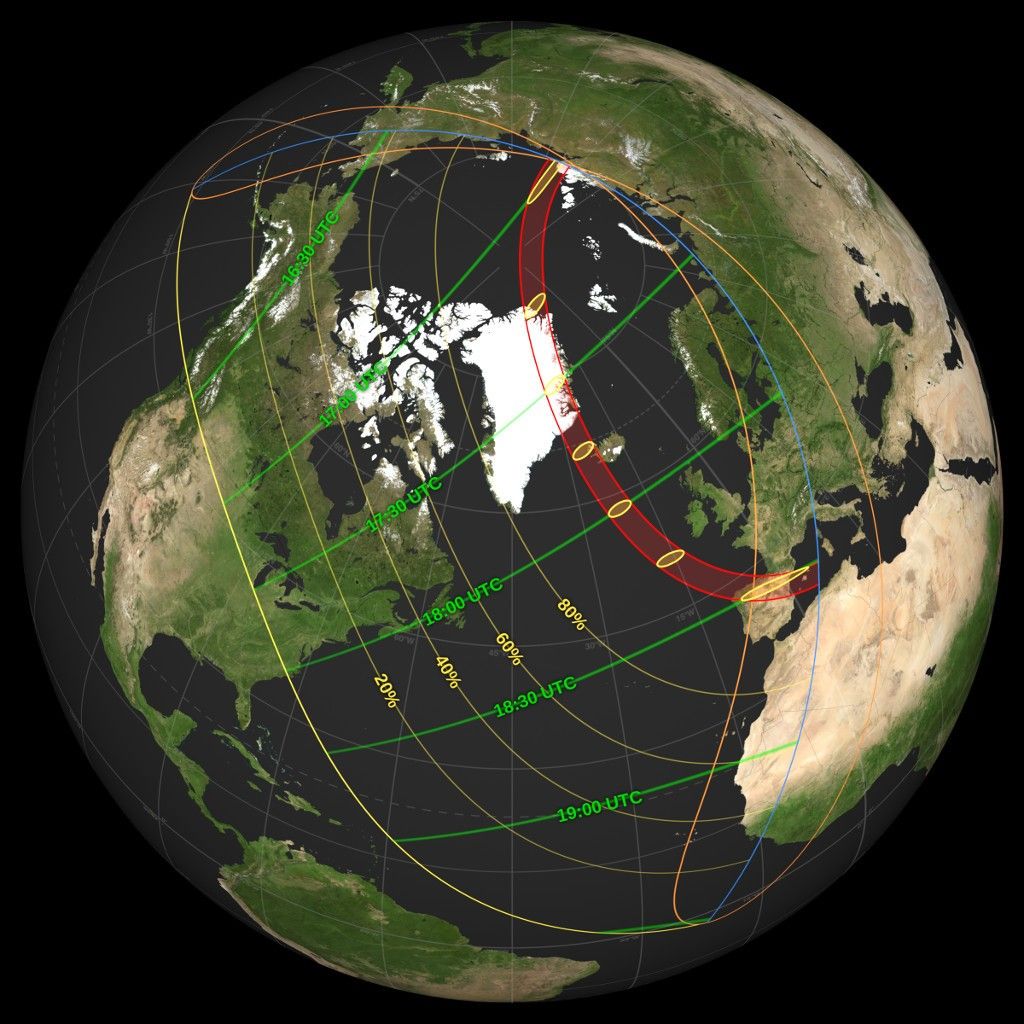
The double-header
These are separate observing sessions. Use the break to move away from lights, eat, rest, and let your eyes adapt before the meteor peak.
The Moon first touches the Sun somewhere on Earth.
The centerline reaches its deepest totality.
At mid-northern latitudes, Perseus climbs to a useful altitude.
Excellent moonlight conditions; actual rates depend on sky darkness and radiant height.
Non-negotiable
Regular sunglasses are not eclipse glasses. Cameras, binoculars, and telescopes need a proper solar filter over the front aperture.
Camera field notes
These are starting points, not guarantees. Focus manually, shoot RAW when possible, and practice before first contact.
Partial phases
Solar filter ON the front of the lens. Use a tripod and 2-second timer.
Totality / corona
Filter OFF only during confirmed totality. Bracket widely; totality is brief.
Perseid meteors
Manual focus at infinity, interval timer, long sequence. Point 30-60° away from the radiant.
Dark-sky protocol
Choose a broad view with the fewest artificial lights, ideally Bortle 4 or darker.
Arrive 30 minutes early. Keep phones dim and red if possible.
Lie back and scan a wide area. Do not stare directly at Perseus.
Bring layers, water, insect protection, and a reclining chair or mat.
A certified Starlight destination south of Teruel. Confirm nighttime access and road conditions before moving after the eclipse.
Katahdin Woods and Waters is an International Dark Sky Sanctuary. It is remote; confirm access, permits, and travel time.
Reykjavik is excellent for totality, but IMO notes that Perseids are not properly viewed north of about 60°N. Plan the two events as separate trips.
Fast answers
No. The August 12, 2026 solar eclipse is not visible from China. Watch an official live stream, then observe the Perseids after midnight if your sky is clear.
No. Use a compliant solar viewer or an indirect projection method. Regular sunglasses, exposed film, CDs, and stacked filters are unsafe.
ZHR 100 is a standardized reference under ideal conditions with the radiant overhead. Real observed rates are usually lower and depend heavily on clouds, light pollution, and radiant altitude.
Look broadly 30-60 degrees away from the Perseus radiant, preferably high in the darkest part of your sky. Meteors there leave longer trails.
Sources & accuracy
City times are from NASA and are local. Meteor timing is from the IMO 2026 calendar. Re-check local weather, terrain, sunset, and official updates before travel.